
Herbs & Wild Fruits
Our ancestors have always used natural herbs to cure illness and dress wounds. With each passing generation, this knowledge is being lost.
Herbs & Wild Fruits
Africa’s footprints to the path that led to modern medicine is often not credited enough. Instead, society has become
accustomed to crediting the beginnings of scientific medicine to Hippocrates, a Greek physician who lived in the fifth century BC. Most people are not aware that even
the oldest known descriptions of diagnostic, prognostic and therapeutic reasoning in the field of medicine also
originate from Africa.
Our treatments were centred around our extensive and diverse medicinal plant life, as well as black people’s work in the craft of fusing different herbs and plants known for their medicinal abilities to create potent medicine. Numerous treatments widely utilized today have historical roots in the practices of various ancient African civilizations.
Prior to the European colonization of Africa, medical knowledge and practices in regions such as Egypt, Nigeria, and South Africa surpassed those in Europe. Modern presentations of ancient medicine, however, deprive blacks of the knowledge of their early contributions to medicine by ignoring or subtly misrepresenting the black identity of the ancient Egyptians.
A few years ago, the world experienced one of the worst pandemics in recent history. The world grinded to a standstill whilst pharmaceuticals rushed to find a cure/ vaccine. Although our governments followed the western approach to close down much of the economy and limit human interactions, unlike the rest of the world Africa experienced the least deaths. We all pursued our ancestral way of using herbs to successfully limit the effectiveness of the virus at no cost whatsoever.
Now the World Health Organization (WHO) has called on African governments to accord formal recognition to traditional medicine, create an enabling environment for its practice in our national health systems. We did not need a western institution to remind us of the vast reservoir of herbs our continent has been enriched with in order to return to our old practices.
In light of our return to grassroots that was hastened by the pandemic, it is clear that the arguments in favour of traditional medicine development and utilization in Africa are, indeed compelling. It is widely available in practically all our communities and is cheaper compared to pharmaceutical pills; it has been and continues to be part of the medical culture of our societies for centuries and its practitioners are highly regarded, with well-established institutional memories.
Our treatments were centred around our extensive and diverse medicinal plant life, as well as black people’s work in the craft of fusing different herbs and plants known for their medicinal abilities to create potent medicine. Numerous treatments widely utilized today have historical roots in the practices of various ancient African civilizations.
Prior to the European colonization of Africa, medical knowledge and practices in regions such as Egypt, Nigeria, and South Africa surpassed those in Europe. Modern presentations of ancient medicine, however, deprive blacks of the knowledge of their early contributions to medicine by ignoring or subtly misrepresenting the black identity of the ancient Egyptians.
A few years ago, the world experienced one of the worst pandemics in recent history. The world grinded to a standstill whilst pharmaceuticals rushed to find a cure/ vaccine. Although our governments followed the western approach to close down much of the economy and limit human interactions, unlike the rest of the world Africa experienced the least deaths. We all pursued our ancestral way of using herbs to successfully limit the effectiveness of the virus at no cost whatsoever.
Now the World Health Organization (WHO) has called on African governments to accord formal recognition to traditional medicine, create an enabling environment for its practice in our national health systems. We did not need a western institution to remind us of the vast reservoir of herbs our continent has been enriched with in order to return to our old practices.
In light of our return to grassroots that was hastened by the pandemic, it is clear that the arguments in favour of traditional medicine development and utilization in Africa are, indeed compelling. It is widely available in practically all our communities and is cheaper compared to pharmaceutical pills; it has been and continues to be part of the medical culture of our societies for centuries and its practitioners are highly regarded, with well-established institutional memories.
“When brothers fight to death a stranger inherits their father’s estate”
~ Chinua Achebe
While our government is dealing with diminishing national incomes and the latest cuts in foreign aid, the search for effective treatment for common diseases using medicinal plants must be encouraged.
Medicinal plants are plants which are used in herbalism and thought to have certain extractable/compound in their leaves, stems, flowers and fruit for medicinal purposes. These extracts are used as inputs in the pharmaceutical, insecticide and other chemical industries.
Our channel will be detailing geographic locations of various herbs, their uses and how to prepare them. All this will be done in collaboration with medical institutions and herbalists. Below is an example of our template:
Moringa Production areas: In South Africa, Moringa oleifera is produced in Limpopo Province, Free State, Mpumalanga, KwaZulu- Natal and Gauteng
Parts used: Leaves
Propagation: It may be grown from seeds and stem cuttings. Seeds can be collected in winter or spring.
Planting: It can be planted in spring, 1,5 to 2 m from each other.
Fertilisation: A small quantity of manure is required to enhance the growth of the plant and organic compost to speed up growth.
Harvesting: Moringa leaves can be harvested as soon as 6-8 weeks after plantin. Once harvested,they regrow quickly, allowing for multiple harvests within a year.
Uses: Acts as a powerful antioxidant, helps manage blood sugar, supports liver and heart health.
Medicinal plants are plants which are used in herbalism and thought to have certain extractable/compound in their leaves, stems, flowers and fruit for medicinal purposes. These extracts are used as inputs in the pharmaceutical, insecticide and other chemical industries.
Our channel will be detailing geographic locations of various herbs, their uses and how to prepare them. All this will be done in collaboration with medical institutions and herbalists. Below is an example of our template:
Moringa Production areas: In South Africa, Moringa oleifera is produced in Limpopo Province, Free State, Mpumalanga, KwaZulu- Natal and Gauteng
Parts used: Leaves
Propagation: It may be grown from seeds and stem cuttings. Seeds can be collected in winter or spring.
Planting: It can be planted in spring, 1,5 to 2 m from each other.
Fertilisation: A small quantity of manure is required to enhance the growth of the plant and organic compost to speed up growth.
Harvesting: Moringa leaves can be harvested as soon as 6-8 weeks after plantin. Once harvested,they regrow quickly, allowing for multiple harvests within a year.
Uses: Acts as a powerful antioxidant, helps manage blood sugar, supports liver and heart health.
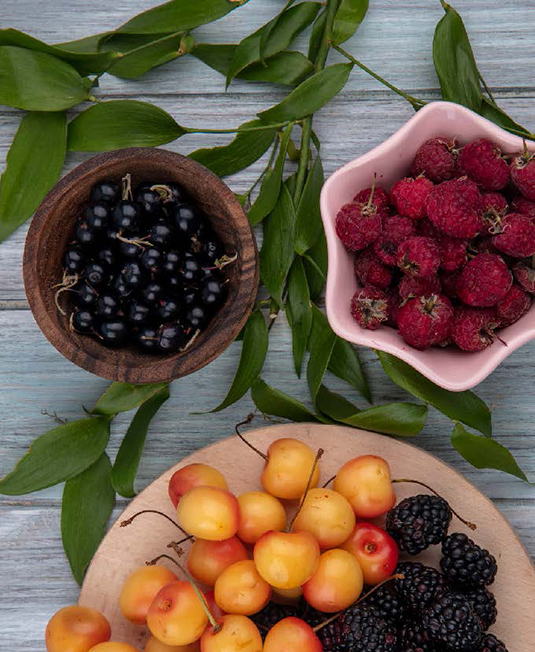
South African Indigenous fruits are fruits that are found in the wild, but are also commercially grown to be eaten fresh
or processed into products such as jams or drinks. It is one of the main options in times of hunger and nutritional deficiency in Southern Africa. Our early ancestors passed down this knowledge from their days as hunter gatherers
who would often travel for days hunting game for their families.
Studies have shown that harvesting fruits from the wild and from the semi-domesticated trees growing on farms can boost rural employment. In addition, processing indigenous fruit into jams and juices can create an extra income. Native edible wild fruits can help prevent food insecurity and assist in alleviating poverty and the lack of nutrients and vitamins in children.
Some indigenous fruits are an important item of trade and are sold along roadsides in many parts of southern Africa. Some show potential as new commercial crops and progress has been made with marula (Sclerocarya birrea).
Marula
This large fruit-bearing tree is commonly found in the Limpopo province of South Africa. The fruit is harvested as it falls off the tree (January to April) and eaten fresh or processed into a jam. It is also processed into alcoholic beverages such as beer and a popular liquor called Amarula.
Kei Apple
The tangy and aromatic Kei apple fruits are eaten raw, preferably sprinkled with sugar. The fruit is high in vitamin C and contains various amino acids. Its natural high acidity makes it good for jams. The thorny, bushy tree makes popular hedges.
Studies have shown that harvesting fruits from the wild and from the semi-domesticated trees growing on farms can boost rural employment. In addition, processing indigenous fruit into jams and juices can create an extra income. Native edible wild fruits can help prevent food insecurity and assist in alleviating poverty and the lack of nutrients and vitamins in children.
Some indigenous fruits are an important item of trade and are sold along roadsides in many parts of southern Africa. Some show potential as new commercial crops and progress has been made with marula (Sclerocarya birrea).
Marula
This large fruit-bearing tree is commonly found in the Limpopo province of South Africa. The fruit is harvested as it falls off the tree (January to April) and eaten fresh or processed into a jam. It is also processed into alcoholic beverages such as beer and a popular liquor called Amarula.
Kei Apple
The tangy and aromatic Kei apple fruits are eaten raw, preferably sprinkled with sugar. The fruit is high in vitamin C and contains various amino acids. Its natural high acidity makes it good for jams. The thorny, bushy tree makes popular hedges.
COLLABORATE WITH
HERITAGE LIBRARY
Although we already have a vast collection of literature, we would like your help. If you are a scholar, student or professor, please register and share your studies, stories and knowledge with us so we may preserve it for the future.
To read more about how you can become part of Heritage Library click on the learn more link.