
Cultural Attire
Our attire should be a constant reminder to other Africans not to get too caught up in mainstream pop culture.
Cultural Attire
It must be noted that in pre-colonial worldview, women were never seen as sex objects. This the reason why many traditional photographs at the time show women posing half- naked with less care in the world as such has been their way of life. Being ashamed of one’s body began with the teachings of colonial school system, life styles, Christianity and the introduction of sex through media channels.
African women were comfortable walking around their villages half-naked without arousing men before men’s conscience on sexuality was corrupted. One of the last known cultural events in the southern hemisphere, the Swazi reed dance showcases half-naked young virgin girls who cut reeds and present them to the Queen Mother.
African clothing symbolizes ones culture and history and is a constant reminder to other Africans not to get too caught up in mainstream pop culture, which often doesn’t offer much in terms of traditional values.
People who reside in the tropics generally have brighter clothing than those who experience long winters. The whole environment is more brightly coloured, so no doubt, fashion is inspired by those colours.
South Africa, with an estimate of more than 60 million people from countless backgrounds and ethnicities holds in it an immense cultural diversity that is expressed through the vast array of topics ranging from cuisine, music, languages to traditional attire. This diversity has given rise to a variety of traditional dresses. In African cultures for example, age and social standing is reflected in the clothes a person wears.
Similarly, traditional Maasai beaded collars use colours to identify their age, social status, marital status and clan. Red is the most important colour; symbolizing courage, bravery, and strength. The Maasai also believe that red scares off predators like lions even at long distances.
We must acknowledge and celebrate the fact that African couples are now starting to celebrate their courtship in the form of a traditional wedding which is a spectacle that allows friends and families to dress in their own traditional wear as they accompany the bride to the grooms homestead.
The Heritage Library will engage both scholars and traditional leaders to create a full catalogue of African attire with full descriptions on each item and its purpose in society. The research material will be used to dress the very same characters in our animations, giving them a cultural identity all Africans can associate with.
African women were comfortable walking around their villages half-naked without arousing men before men’s conscience on sexuality was corrupted. One of the last known cultural events in the southern hemisphere, the Swazi reed dance showcases half-naked young virgin girls who cut reeds and present them to the Queen Mother.
African clothing symbolizes ones culture and history and is a constant reminder to other Africans not to get too caught up in mainstream pop culture, which often doesn’t offer much in terms of traditional values.
People who reside in the tropics generally have brighter clothing than those who experience long winters. The whole environment is more brightly coloured, so no doubt, fashion is inspired by those colours.
South Africa, with an estimate of more than 60 million people from countless backgrounds and ethnicities holds in it an immense cultural diversity that is expressed through the vast array of topics ranging from cuisine, music, languages to traditional attire. This diversity has given rise to a variety of traditional dresses. In African cultures for example, age and social standing is reflected in the clothes a person wears.
Similarly, traditional Maasai beaded collars use colours to identify their age, social status, marital status and clan. Red is the most important colour; symbolizing courage, bravery, and strength. The Maasai also believe that red scares off predators like lions even at long distances.
We must acknowledge and celebrate the fact that African couples are now starting to celebrate their courtship in the form of a traditional wedding which is a spectacle that allows friends and families to dress in their own traditional wear as they accompany the bride to the grooms homestead.
The Heritage Library will engage both scholars and traditional leaders to create a full catalogue of African attire with full descriptions on each item and its purpose in society. The research material will be used to dress the very same characters in our animations, giving them a cultural identity all Africans can associate with.

“The most essential kind of knowledge is not yet widely accessible” ~ Unknown
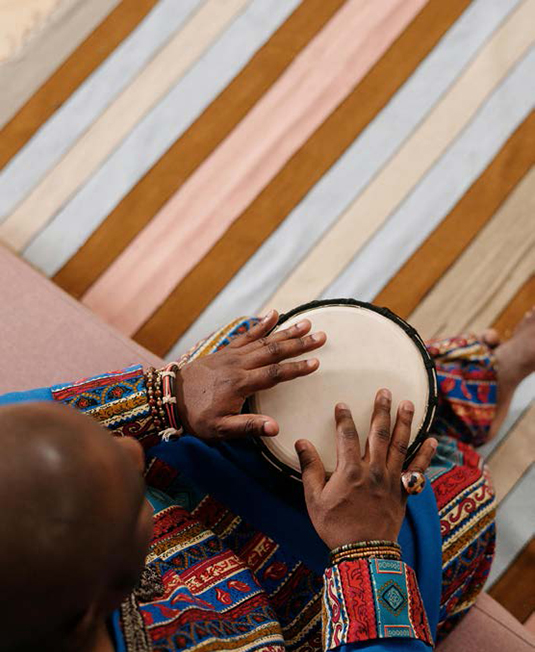
Below is the various types of traditional wear found in African culture:
The Xhosa culture has a complex dress code informed by a person’s social standing, and features beautiful beadwork and printed fabrics.
An African single young woman wears her hair short and only a short grass-reed skirt embellished with beads, while engaged women will cover their breasts and grow their hair.
A married woman covers her entire body to indicate that she is spoken for. She wears a thick cowhide skirt that has been softened with animal fat and charcoal.
An African single young woman wears her hair short and only a short grass-reed skirt embellished with beads, while engaged women will cover their breasts and grow their hair.
A married woman covers her entire body to indicate that she is spoken for. She wears a thick cowhide skirt that has been softened with animal fat and charcoal.
COLLABORATE WITH
HERITAGE LIBRARY
Although we already have a vast collection of literature, we would like your help. If you are a scholar, student or professor, please register and share your studies, stories and knowledge with us so we may preserve it for the future.
To read more about how you can become part of Heritage Library click on the learn more link.